There is a growing awareness in several strands of evangelicalism that faithfulness to the gospel today demands a thicker account of tradition—especially the creeds and councils of the early church. A facile biblicism that understands sola Scriptura not as the primacy of Scripture but the exclusivity of Scripture is as impossible as it is imprudent. This accounts for at least one reason why the Southern Baptist Convention made headlines this year (okay, headlines modestly conceived) over adding the Nicene Creed to the Baptist Faith and Message.
Another sign of the resurgent interest in creeds and classical theology are the some of the new books from evangelical presses on the importance of tradition. In the late 1900s and early 2000s, D.H. Williams’s Retrieving the Tradition and Renewing Evangelicalism and Evangelicals and Tradition were lonely seeds planted in a barren wilderness. Today, those seeds are bearing more fruit.
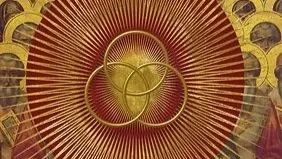
Two recent iterations of this credal retrieval are Carl Trueman’s Crisis of Confidence: Reclaiming the Historic Faith in a Culture Consumed with Individualism and Identity (Crossway, 2024), a revised edition of his 2012 The Creedal Imperative. Another is a massive volume edited by Matthew Barrett called On Classical Trinitarianism: Retrieving the Nicene Doctrine of the Triune God (IVP Academic, 2024), which contains 40 essays across some 800 pages on various aspects of “Nicene Trinitarianism.” These two books give a good sense of why and how evangelical theology retrieve credal and Trinitarian theology for renewing the church today.
Trueman’s book is a short manifesto for why evangelicals Christians should be unashamed credalists. The argument for credalism is multifaceted, but at its heart is a claim about the necessity of the creeds for faithful biblical witness. Appealing especially to evangelicals raised in Bible-only contexts, where “No creed but the Bible” functions (unironically) as its implicit creed, Trueman highlights the impossibility of credalism’s alternatives. For those familiar with Trueman’s work on the nature of expressive individualism as the central tenet of our modern secular culture, one can see this book on the creed as saying, “If expressive individualism has utterly failed (and it has), perhaps try this.”
The book is not simply cultural critique, however, as Trueman presents a more positive vision for how creeds and confessions emerge from the Bible and shape its proper interpretation. He also argues that creeds are a central to Reformed theology, prominent in Calvin, Luther, Owen, Edwards, and others. He also looks to the importance of the emergence of creeds in the early church and the equally important emergence of confessions in the Reformation period to further distinguish the right reading of Scripture. His clarification about the distinction between early church creeds, like the Apostles’ and Nicene Creeds, on the one hand, and confessions, on the other, such as the Westminster Confessions, or the London Baptist Confession, was especially helpful. The former align these traditions with the universal (catholic) church, while the latter distinguish further
One question for this this new edition is whether such confessions should be updated. Especially in light of issues surrounding gay marriage and human sexuality, many Christians might like to see more clearly articulated statements in Christian confessions that regulate orthodox views of gender and the human body. “Let anyone who says, ‘There was a time when human nature was not,” be anathema! Trueman counsels, however, focusing first on the creeds we have, and allowing the architecture of Christian doctrine to shape our way of understanding God, the world, and ourselves, before we begin to approach such questions. Let’s first understand the integrity and architecture of the given creeds before posing new ones. Wise words for the more theologically fidgety among us.
That task of deeply understanding creedal faith is exceptionally—perhaps even a little laboriously—undertaken in On Classical Trinitarianism. Matthew Barrett is a professor of Theology at a Midwestern Baptist Seminary, editor of Credo Magazine, and director of the Center for Classical Theology. In all these roles, Barrett has argued for the recovery of “classical theology,” especially among his Baptists, with the aim to re-educate his tribe in the basic grammar of patristic, scholastic, and Reformed Orthodox theology.
With a few notable appearances from Catholic and Orthodox theologians like Andrew Louth, Matthew Levering, Gilles Emery, Karen Kilby, Thomas Weinandy, and a few others, the majority of the volumes 40 contributors come from Reformed, Baptist, and evangelical churches and institutions. Interestingly, only a handful of these would probably be considered as “patristics” scholars or historians of early Christian doctrine. The bulk are evangelical systematic theologians with a deep sympathy for fourth-century Nicene theology. They have read a good knowledge of primary sources, especially Athanasius, Augustine, and the Cappadocian Fathers, and they have read some of the better recent scholarship, mostly Lewis Ayres’s 2003 Nicaea and its Legacy. But the volume is less about the history of Nicene Trinitarianism and more about retrieving a deep understanding of classical Nicene Trinitarianism for contemporary theology.
If the more general threat motivating many the volume’s contributors is the kind of overarching anthropocentricism of the kind that Trueman deals with, this book’s particular targets are two forms of trinitarian revisionism. One is of a broadly Barthian stripe, though more evident in Zizioulas, Rahner, and Moltmann, which links a rejection of classical metaphysics (divine simplicity, impassibiliy, etc.) with a vision of the three divine persons as three “centers of consciousness” that are more or less like three human persons, leading to a social trinitarianism that then becomes closely bound to—and arguably driven by—a social egalitarian kind of politics. The other is an evangelical revisionism, manifest in the work of scholars like Wayne Grudem and Bruce Ware who defended the “eternal subordination of the Son” as a linchpin in their advocation of gender complementarian. In both cases, Trinitarian theology is revised to serve modern political agendas, whether of a conservative or progressive variety.
Needed, then, is attention to three aspects of a Nicene Trinitarian retrieval, which maps onto the book’s three parts. In the first part, eleven essays discus historical portraits of Nicene theology, most from the fourth to seventh centuries (Athanasius, Hilary, Augustine, Cappadocians, Maximus), but also a few medieval (Anslem and Aquinas) and Reformation theology, and one essay about the modern disappearance of classical Trinitarianism.
Part Two is labeled “Trinitarian Hermeneutics and Nicene Dogmatics.” Here there are eighteen chapters on various aspects of Nicene Trinitarianism: divine incomprehensibility, immutability and impassibility, simplicity, aseity, divine love, inseparable operations, the eternal begetting of the Son, procession of the Spirit. These essays articulate the theological grammar of Nicene Trinitarianism—it’s deep logic and interconnected theological entailments. If the first part shows how the building came together, the second surveys its architectural components in detail, to see how they provide different but mutually coherent—and indeed necessary—theological entailments.
Finally, Part Three revisits the various applications of Nicene Trinitarianism. If the modern Trinitarian revival of turns to have been less revival than innovation, how should theologians retrieve the classical doctrine today as constructive and corrective medicine to our modern Trinitarian malaise? These essays take up various responses to the challenge mainly of social Trinitarianism, but also to a lesser degree eternal subordination of the Son, and other modern theological challenges, such as the still prevalent biblicism of much modern evangelicalism.
As expansive as this volume is, there are an abundantly broader range of questions and topics that classical Trinitarian theology addresses. It is not only overcoming social Trinitarianism or the eternal subordination of the Son that is at stake. As several authors mention, classical Trinitarianism is related to prayer, spirituality, worship, ethics, and more. I was surprised not to find dedicated chapters on these topics in On Classical Trinitarianism. Notably, Trueman’s short book has a whole chapter entitled “Confession as Praise” that argues for the deep interconnections of doctrine and doxology. Especially for pastors and preachers, this aspect of classical theology must be kept clearly in view.
Taken together, these two volumes do a remarkable job helping evangelicals see what’s at stake in retrieving the early doctrine as an ever-flowing fount that helps us see God in Scripture more clearly, helping us know, love, and serve the Lord. There is much more to be done, but we can make good headway by following the paths laid out in these volumes.