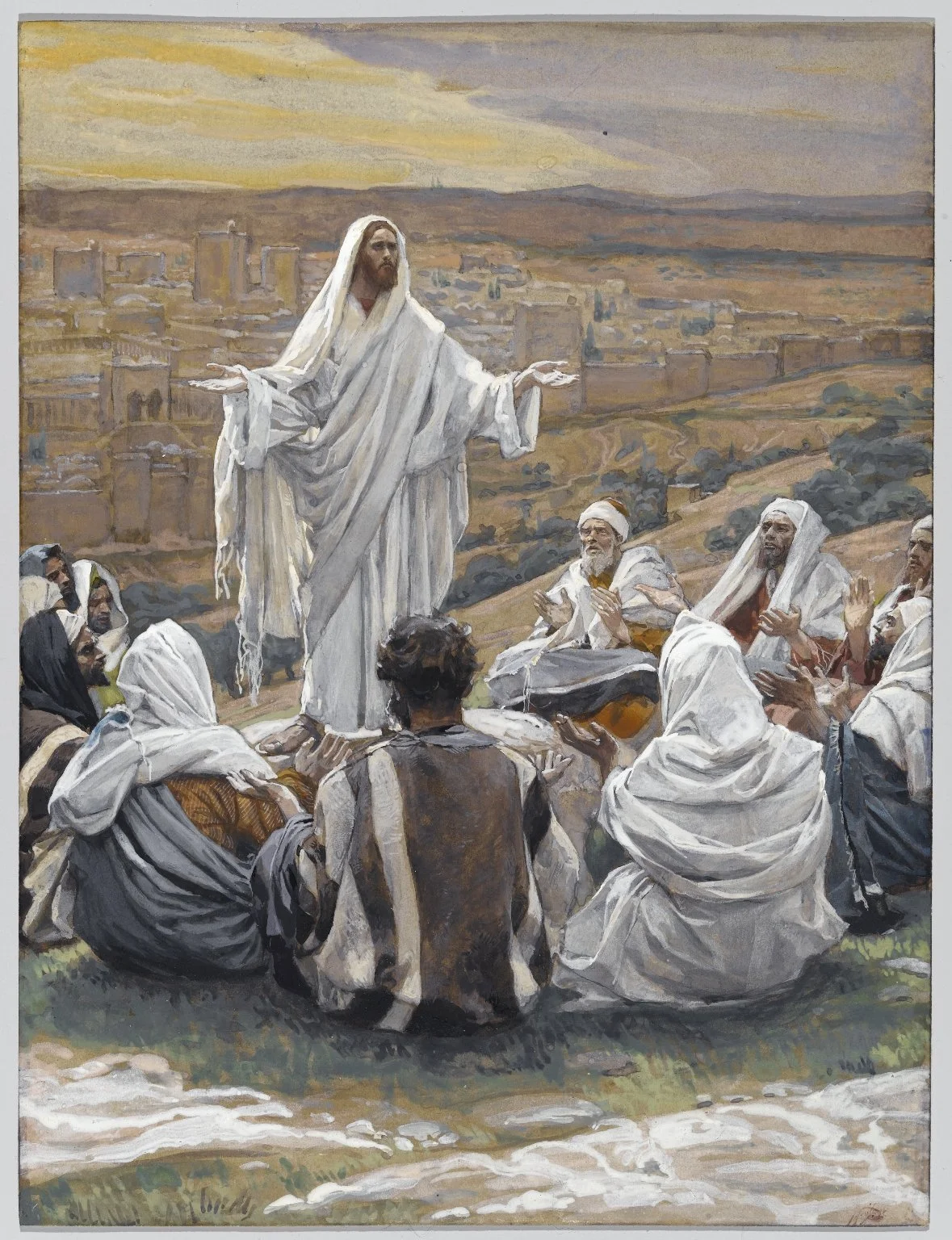
While there are many books on the Lord’s Prayer, they tend towards being highly academic and technical or highly devotional. Catholic New Testament scholar William Wright’s recent book, The Lord’s Prayer: Matthew 6 and Luke 11 for the Church, however, seeks to provide something else. It is part of a newish series by Baker Academic called “Touchstone Texts,” in which biblical scholars do serious work on key biblical texts (Psalm 23, Good Samaritan, Suffering Servant) in a way that is informed but useful for pastors and church teachers. While primarily focused on the text’s “plain sense,” they do not mean simply the ancient historical context but rather, as the series’ editor Stephen Chapman puts it, taking a cue from from Aquinas, “the way the words run.”
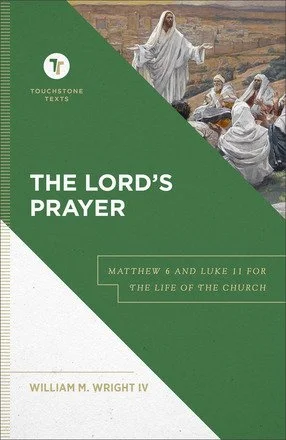
That’s precisely what this book on the Lord’s Prayer does. It’s clearly the work of a good biblical scholar, but gives just enough biblical studies nitty gritty to be useful for the pastor-teacher. He writes within what he calls the Catholic Ressourcement tradition—but from within the discipline of biblical studies rather than, say, theology or patristics. This makes his writing more theologically informed than many New Testament studies, though it doesn’t read (to me anyway) as “Catholic” in a way that would be off-putting to Orthodox or Protestant readers. There’s much to learn here no matter what tradition you’re coming from.
Wright has helpful material about the ancient context of prayer—and specifically learning to pray, which is precisely the context in which Jesus teaches the disciples. He has some helpful paradigms for organizing the prayer. The first three petitions are “You” petitions (Your name, Your kingdom, Your will) and the last four are “Us” petitions (Give us, Forgive us, Lead us, Deliver us)—which I’ve not seen before.
Wright situates the Lord’s Prayer primarily within the context of Jesus’s ministry as a participation in the in-breaking of God’s eschatological kingdom. It’s no coincidence that the LP is at the very center of Jesus’s central “mountaintop” proclamation—the Sermon on the Mount. The prayer’s eschatological orientation helps frame each of the petitions.
Wright is especially adept at pointing the reader to the biblical and especially the Old Testament contexts for the LP. The chapter on the opening address locates thorny question about addressing God as “father” in the Bible. Contrary to some popular notions, Jesus isn’t the first person to speak of God as “father” but is rather drawing on the OT’s use of this idiom to speak of the YHWH-Israel relationship. Israel itself is God’s son—and sometimes this is represented specifically in the Anointed King (Ps. 2). Wright helpfully shows, on primarily biblical grounds, how Jesus’s sonship is expressed in ways that emphasize his naturally divine sonship—a sonship that is then extended to Christ’s followers and all those who are adopted into God’s family via baptism.
The chapter on the hallowing God’s “name” was worth the price of the book. He summarizes this petition by saying that “the name petition is a request for the Father to manifest his holiness by bringing his saving plan to its full completion with the result that people will rightly praise and honor him.”
The petition is prayed in the “divine passive” voice—a way of speaking that asks God to do something without actually using the word “God” (a common Semitic form of speech). There are, here, significant theological implications. It means that God is the main actor who’s carrying out the petition, though it is we who express our agency through prayer. He helpfully unpacks the meaning of “Name” language in the Scriptures as it relates to holiness, which is primarily conditioned by the sense of “otherness.”
Two key passages that the petition alludes to are Ezekiel 36:23 and Isaiah 29:23—both speaking in an eschatological context. Ezekiel is speaking of how Israel has defiled the land and “profaned my holy name” (v.20), but, says the Lord, “I had concern for my holy name, which the house of Israel had profaned among the nations to which they came” (v.21).
22 Therefore say to the house of Israel, “Thus says the Lord God: It is not for your sake, O house of Israel, that I am about to act, but for the sake of my holy name, which you have profaned among the nations to which you came. 23 And I will vindicate the holiness of my great name, which has been profaned among the nations, and which you have profaned among them. And the nations will know that I am the Lord, declares the Lord God, when through you I vindicate my holiness before their eyes.”
As Wright summarizes, “Ezekiel teaches that God will sanctify his name by bringing about the eschatological restoration of Israel and transforming the world. God will thus reveal his own holiness and also sanctify his pople Israel, making them apt to receive his permanent dwelling with them (Ezek. 37:27–28) [p. 81].
The Isaiah passage speaks also concerns sanctifying God’s name.
When [Jacob] sees his children, the work of my hands, in his midst, they will sanctify my name; they will sanctify the Holy One of Jacob, and will stand in awe of the God of Israel” (Isa. 29:23)
The context is once again a future-time eschatological restoration when God will restore Israel and bring justice and righteousness to the world. But whereas Ezekiel emphasizes the God is the primary agent who sanctifies his own name, Isaiah highlights that it is the “children of Jacob” who sanctify God’s name—and that this is closely tied to praising and blessing God [p. 82].
Together, these two passages illuminate the way in which the hallowing of God’s Name in the LP is both a request for divine action and restoration and—precisely as such—a petition for God’s ever-holy Name to be revealed through God’s people, in both their holy lives and majestic praise. Through righteous living and living rites, as it were, God’s Holy Name is revealed for what it is: Holy, Holy, Holy.
The remainder of the chapters follow in a similar pattern: lots of very helpful biblical content that is not devoid of theological implications. This is the kind of book that I find especially helpful in teaching catechesis. In explicating the various petitions of the prayer, one of my aims is to show how the Lord’s Prayer serves, as the ACNA catechism puts it, as the “pattern and practice” of all prayer. In this regard, a book like Wright’s is especially helpful in locating the LP both within the broader scope of the Bible but also as its summary and epitome.