
Attention and Prayer: Wisdom from the Desert

Attention and Prayer: Wisdom from the Desert

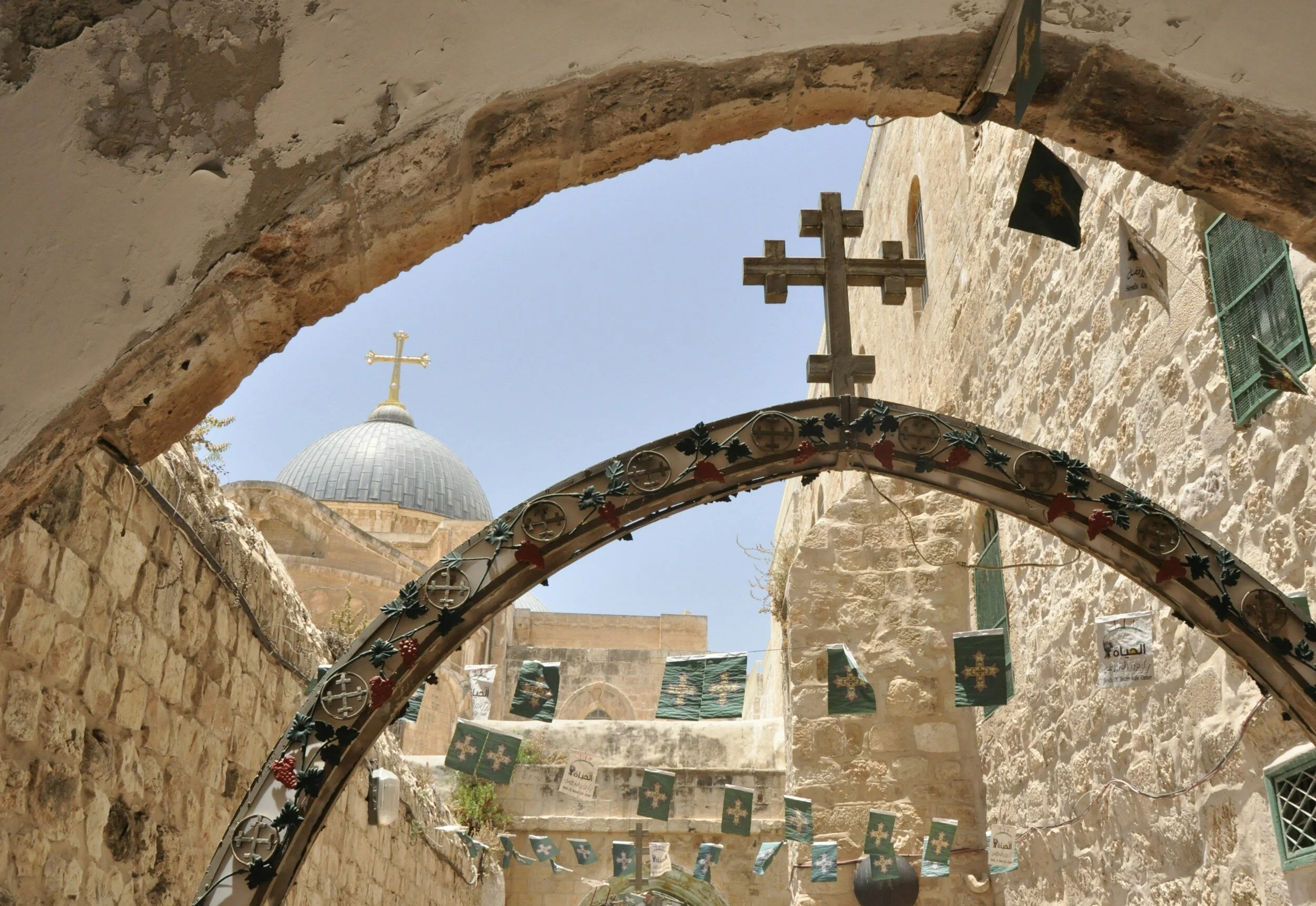
St. Hesychios on attention and prayer: “Watchfulness is a spiritual method which, if sedulously practiced over a long period completely frees us with God’s help from impassioned thoughts, impassioned words, and evil actions. It leads, in so far as this is possible, to a sure knowledge of the inapprehensible God, and helps us to penetrate the divine and hidden mysteries. . . . It is, in the true sense, purity of heart, a state blessed by Christ when He says: “Blessed are the pure in heart, for they shall see God” (Matt. 5:8).
Imitation in Early Christianity

Imitation in Early Christianity

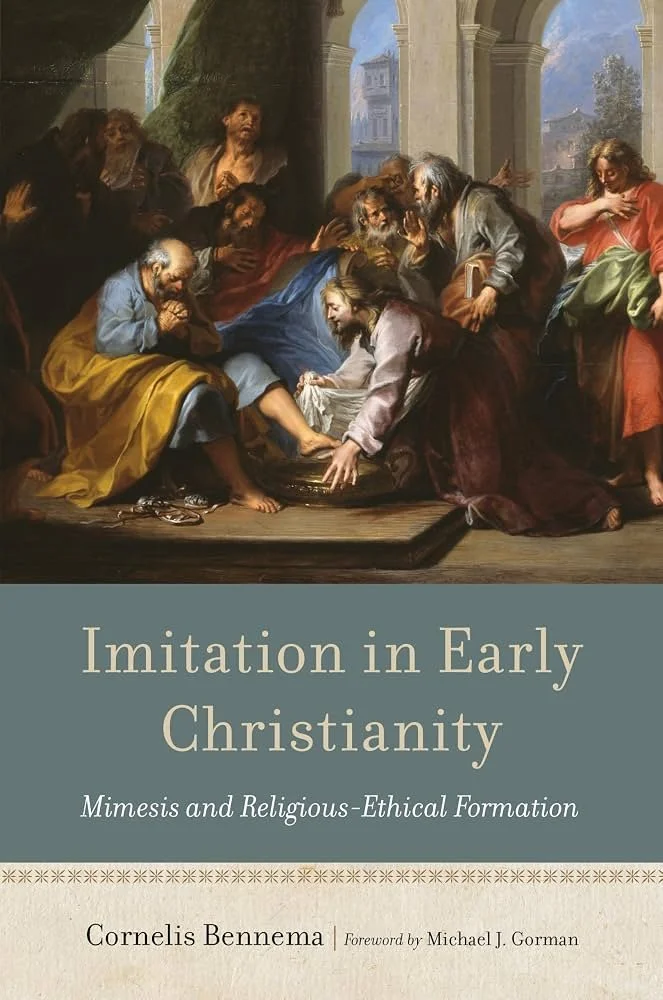
Kendall Mayo on Cornelis Bennema’s Imitation in Early Christianity: "Bennema’s work provides a necessary voice for those interested in fostering vibrant cultures of catechesis within the church. He notes that teachings on mimesis were rarely soteriological, but rather for those who were already “in Christ.” That is, mimesis was primarily a means of education for those who had already called the church “home,” but were now seeking to discern what the Christian life looked like.”

New Books in Early Christianity

New Books in Early Christianity

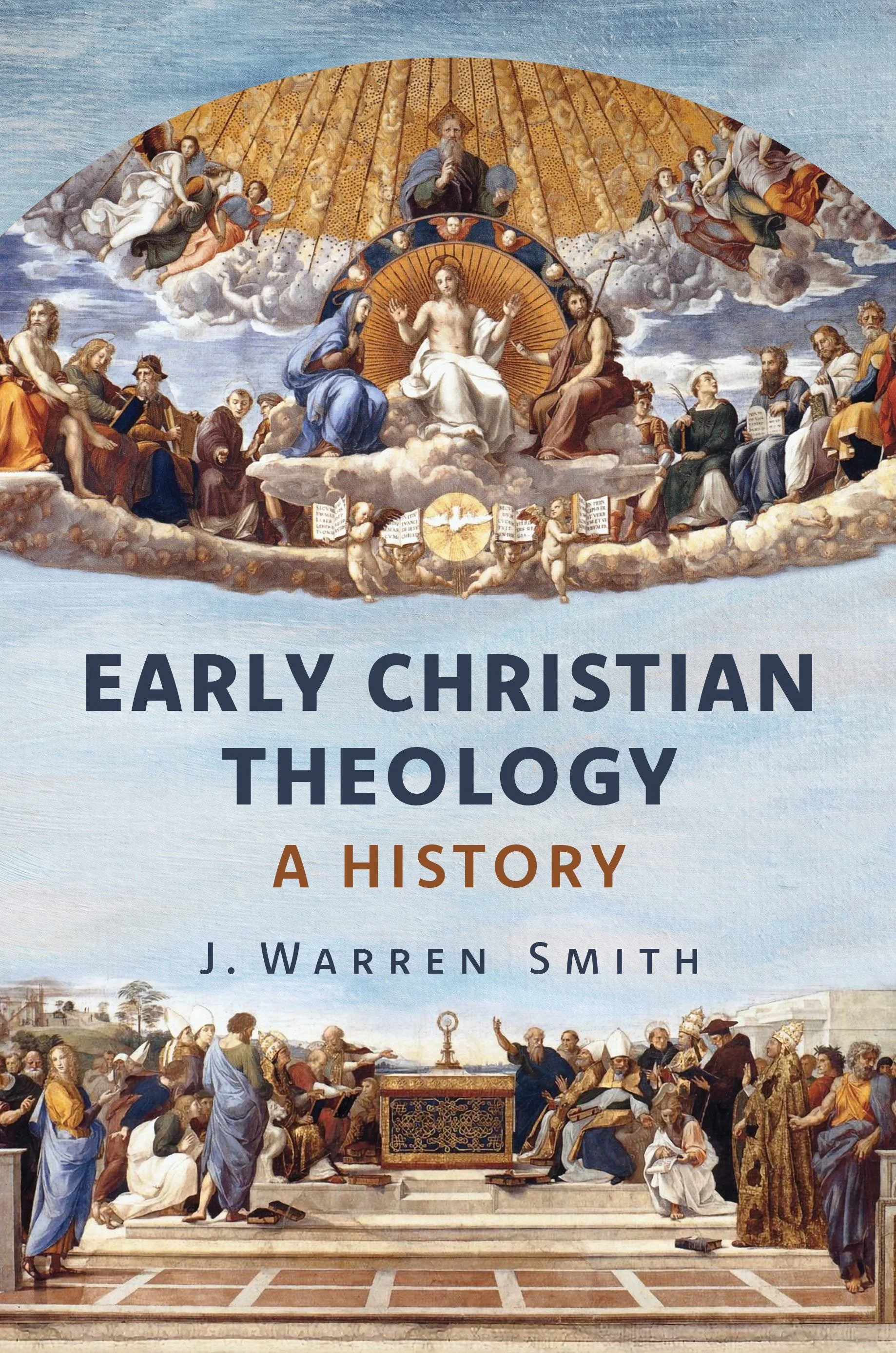
Recently, Eerdmans Press has published two major works by leading patristic theologians in the United States—Warren Smith and Brian Daley. These two volumes not only demonstrate the health and vitality of patristic studies today but also provide students an incisive introduction to the writings of early Christian theologians. They draw us into the conversation and allow us to get to know these patristic voices on their own terms

Passions of the Soul

Passions of the Soul

Rowan Williams on freedom from the passions: “The light of the resurrection is not only what allows us to see ourselves a bit more clearly…. It is what allows us to see the entire landscape of God’s creating activity in the radiance of Christ’s presence in the Spirit. This landscape is, by God’s grace, show to us as our homeland; it is where we belong. And this is what the life of apatheia, the life of freedom from the tyranny of ‘passion’, is finally about; living in the joyful and grateful awareness of God’s perspective on the creation God loves and transfigures; praying and labouring day by day for that inch-by-inch growth in clarity, freedom, charity; growing in the right kind of detachment that lets us see our muddled lives embraced and healed in Jesus, the author and the pioneer of our faithfulness.”

The Riches of Catechesis

The Riches of Catechesis

To push back at my own thin dimension, I recently made myself try a small experiment. Every time I felt the urge to check my phone, to ask if it might delight me with a fun text or distraction, I “answered” by quietly reciting the Apostles’ Creed. The difference in my reaction, in my mind and in my body, shocked me. At first it was hearing “maker of heaven and earth”; another time it was “resurrection of the dead”; these phrases both calmed and cheered me. After saying the Creed for the fourth time one afternoon, I literally heard myself admit, “That’s the world I want.”

New Catechesis Books from Lexham Press

New Catechesis Books from Lexham Press

Lexham Press has swiftly become one of the leading evangelical presses producing catechesis books—which I hope many other presses will follow! … But unlike many other presses, who might balk at the term catechesis, Lexham has unapologetically foregrounded it, publishing usable, orthodox resources for catechesis—rooted in solid theology with a pastoral and familial orientation. In this post, we review two new books in their catalogue: the Lexham Press Essentials Catechism and The Ten Commandments for All God’s Children.

What was Lent like in the Early Church?

What was Lent like in the Early Church?

A fourth-century pilgrim on Lenten catechesis: “After the Creed has been repeated to the bishop, he addresses them all and says: ‘For these seven weeks you have been taught all the law of the Scriptures and you have also heard about the faith; you have also heard about the resurrection of the flesh and also the whole meaning of the Creed, as far as you can hear while still catechumens: but those things that are of a higher mystery, that is, of baptism itself, you cannot hear, being still catechumens.’”

Knowing God in Patristic Catechesis

Knowing God in Patristic Catechesis

Rowan Williams has famously written that theology as a discipline is “perennially liable to be seduced by the prospect of bypassing the question of how it learns its own language.” My hope is that this project offers a picture of early Christian catechesis that helps us remember, quite literally, how early Christian theology learned its own language. What it means to know God is inseparable from the ways in which such knowledge is experienced; medium and message are tightly linked. In studying early Christian catechesis, we observe how knowing God belongs within a set of ecclesial practices in which the meaning of knowledge and faith are found in – and founded upon – Jesus Christ. Advancing from faith to understanding, from belief in God to the knowledge of eternal wisdom, begins and ends with Christ.

Institutio viva voce: John Donne on Catechesis

Institutio viva voce: John Donne on Catechesis

John Donne on the importance of catechesis: “Except ye, ye the people be content at first to feed on the milk of the Gospel, and not presently to fall to gnawing of bones, of Controversies, and unrevealed Misteries, And except ye, the Ministers and Preachers of the Gospell, descend and apply your selves to the Capacitie of little Children, and become as they, and build not your estimation only upon the satisfaction of the expectation of great and curious Auditories, you stop theirs, you lose your own way to the kingdom of Heaven.”

The Way of Beauty: Pope Francis on Catechesis and Kerygma

The Way of Beauty: Pope Francis on Catechesis and Kerygma

Pope Francis on the catechesis and the “way of beauty”: “Every form of catechesis would do well to attend to the “way of beauty” (via pulchritudinis). Proclaiming Christ means showing that to believe in and to follow him is not only something right and true, but also something beautiful, capable of filling life with new splendour and profound joy, even in the midst of difficulties. Every expression of true beauty can thus be acknowledged as a path leading to an encounter with the Lord Jesus.”

A World Fit For Questions

A World Fit For Questions

Matthew Lee Anderson on Questions: “We need some kind of formation to get our explorations started…. ‘Home is where one starts from,’ T. S. Eliot wrote. We do not enter life as though it were formless and void: we inherit a framework, an intellectual shelter from which we explore the world. Every child is indoctrinated in a way of seeing things. The only question is, which one? … We do not begin our lives by choosing our beliefs because we do not “possess” our beliefs at all. They are not pieces of clothing that we pull off the rack and replace with ease. Our beliefs possess us, establishing a pattern for our lives and shaping our desires and dispositions. We inhabit our beliefs like we do our homes, and changing them can often be extremely painful.”

A Script for the Christian Life: Trevor Hart on the Creed

A Script for the Christian Life: Trevor Hart on the Creed

Trevor Hart on the Apostle’s Creed and the Christian imagination: “But bullet pointed though it may be, the Apostles’ Creed is nonetheless a power-packed summary designed precisely to capture our imagination and, far from shutting it down or rendering it otiose, to send it into paroxysms of visualization, curiosity, and exploration, and its brevity and clarity make this particular creed far more useful in practical terms than some others.”

Catechized by a Peculiar People

Catechized by a Peculiar People

David Lyle Jeffrey on his baptism in the Scottish Baptist Church in rural Canada: “A feature of baptism in our tradition that I continue to value is that it makes you think about the meaning of it quite a lot, both before and after the experience. One of the questions that friends would ask me is, “Do you feel any different?” My Catholic friends especially, since they had the luxury of having just a few drops on their heads when they were too young to remember, wanted to know. Actually, I did feel different, though not perhaps in quite the way they may have expected. It wasn’t euphoric. Rather, I felt as though I had entered into the community of grownups in some way.”

Memory and Attention: Hans Boersma's Pierced by Love

Memory and Attention: Hans Boersma's Pierced by Love

Hans Boersma on spiritul reading: “It is important, therefore, to appreciate that lectio divina is nothing out of the ordinary. When we do lectio divina, we read Scripture in line with its divine character—as we always should. To be sure, this claim has a polemical edge. It implies that we do not find the meaning of Scripture simply by asking what the human author intended with the text. We do not find the meaning of Scripture simply by sticking with a proper method, whether of a grammatical or a historicalcritical nature. In short, we do not find the meaning of Scripture when we think of ourselves first and foremost as historians. We find meanings—note the plural!—of Scripture primarily by looking forward (to its divine purpose) rather than by looking backward (to its human origins).”

Catechesis as Resistance: K.H. Miskotte's Biblical ABCs

Catechesis as Resistance: K.H. Miskotte's Biblical ABCs

Kornelis Heiko Miskotte, 20th-century Dutch Reformed theologian and Nazi-resistor, on relearning the spiritual grammar of the divine Name in catechesis: “The central place of the Name means that revelation is always a particular revelation—always has been, is, and will be. God has a name: God is not the nameless one. God is not the All, but is known as a reality that distinguishes itself in the world from the world. God does not appear to us as the most general, that which can be found everywhere, but rather as the most unique, that which can be sought and found somewhere specific. This does not mean God couldn’t be the most general and the all-powerful and the omnipresent, but rather that the road to knowledge does not begin with the general. We must follow this road, the road of Revelation, to meet the true and living Godhead.”

Catechesis in the Workshop of Virtue

Catechesis in the Workshop of Virtue

Gregory of Nyssa on education as craftsmanship: Grace begins at home. Here is the workshop of the virtues in which such a life is purified to the highest point. Great is the power to teach this divine regimen through deeds, both on the part of those who are silent and those who speak out, since every word seen apart from deeds, even if it is beautifully decked out, is like a lifeless icon which portrays a form blooming with paint and color, but ‘he that shall do and teach,’ as the Gospel says somewhere, this man is truly alive and outstandingly beautiful and effective in his movements.

The Catechist as Historian

The Catechist as Historian

A review of Mark Noll, David Komline, and Han-luen Kantzer Komline’s Turning Points: Decisive Moments in the History of Christianity, 4th ed. (Gand Rapids: Baker Academic, 2022): “The book remains—in substance and style—a gift to Christian pastors, teachers, and lay persons who want to understand the Christian past better and in ways that can inspire thoughtful Christian living.”