

By Alex Fogleman
One of the great challenges of prayer is simply learning to pay attention. This was the great insight of the twentieth-century philosopher Simone Weil, who famously proposed that “attention, taken to its highest degree, is the same thing as prayer.” Attention is especially pertinent in our technological milieu, when social media and advertising join forces to brew an intoxicating cocktail perpetually on offer in the Age of Distraction.
But what is attention, and how does it work? Is it just turning off my phone and ditching social media? What else does attention involve? At a basic level, attention is the capacity to perceive certain aspects of an environment that may otherwise be missed. We notice a maple tree and not just a generic tree. We make out the call of a robin in distinction from other birds. Cultivating the kinds of attention that enable these perceptions involve traditions, practices, language, and a host of other factors.
But it’s also true that attention is more than merely cognitive. As wiser souls like Alan Jacobs and Michael Sacasas have noted, the challenge of attention encompasses an entire world of relationships, socialities, and pathologies. “The problem of distraction,” as Sacasas puts it, “can just as well be framed as a problem of loneliness.”
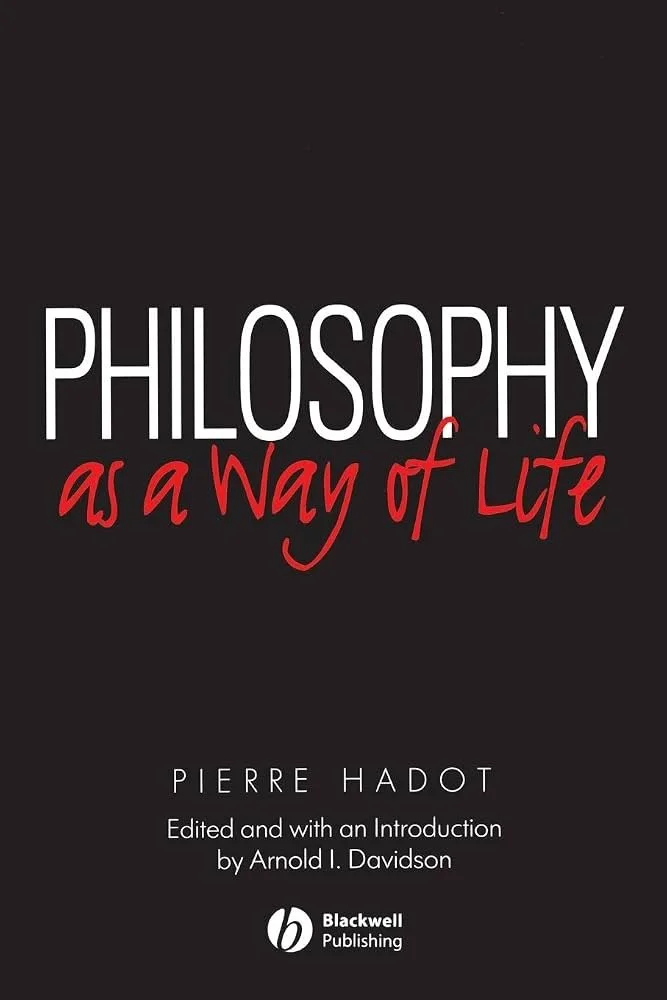
The challenge of attention, for better or worse, is not new. Philosophers in the ancient world thought as much if not more than we do about how to live well—how to live in a way that is less distracted and more ordered towards unity and wholeness, tranquility and purposefulness. Pierre Hadot, in his seminal work on ancient philosophy as a “way of life,” signals out attention as a key aspect of ancient philosophy. Attention (prosochē), he writes, is the quintessential philosophical attitude.
It is a continuous vigilance and presence of mind, self-consciousness which never sleeps, and a constant tension of the spirit. Thanks to this attitude, the philosopher is fully aware of what he does at each instant, and he wills his actions fully. Thanks to his spiritual vigilance, the Stoic always has “at hand” (procheiron) the fundamental rule of life: that is, the distinction between what depends on us and what does not. A “fundamental attitude” of “continuous attention, which means constant tension and consciousness, as well as vigilance exercised at every moment.
— Hadot, Philosophy as a Way of Life, 84
Attention, Hadot goes on to say, is not only a moral attitude but also a “cosmic consciousness.” It pertains to a person’s awareness of the presence of the divine at every moment, and helps the student adjust his or her intentions accordingly. Marcus Aurelius’s Meditations offers a good example of the connection between attention and that which is present: “Everywhere and all the time it lies within your power to be reverently contented with your present lot, to behave justly to such people as are presently at hand, and to deal skilfully with your present impressions so that nothing may steal into your mind which you have not adequately grasped” (Marcus Aurelius, Meditations 7.54).
In many ways, attention for the ancient philosopher was not merely one practice of philosophy but the whole aim of philosophical practice. Hadot even suggests that ancient philosophy as a whole was learning to cultivate attention.
Attention as Theological Anthropology
Attention was also a prominent feature of early Christian theology, something already embedded in Scripture. It was not only about one’s attitude or mental cognition, though. It was a summons to reflect on human nature. Origen, for example, reflected on self-knowledge and attention in his Commentary on the Song of Songs, discussing Song of Songs 1:8 as a particularly Solomonic precursor to the Delphic maxim “Know thyself.” Verse 1:8 reads: “Unless thou know thyself, O fair one among women, go forth in the footsteps of the flocks, and feed thy goats among the shepherds’ tents” (Song 1:8 LXX).
For Origen, this passage signaled a twofold form of attention: knowledge of human nature and knowledge of one’s own virtues, affections, and actions. The soul should know “both what she is in herself, and how she is actuated; that is to say, she ought to know what she is like essentially, and what she is like according to her dispositions” (Origen, Commentary on Song of Songs 2.5; ACW 26:130).
Origen begins with the latter. A Christian should pay attention to whether, in what circumstances, and in what modes the soul is given to certain vices—anger, fear, sadness, etc. How do I respond to praise? With what kind of attitude to give alms? These questions are key ways of “knowing thyself.”

Second, the Christian should undertake to know what the soul is: Is the soul created or uncreated, corporeal or incorporeal, temporal or eternal, simple or complex? Ultimately, these questions point to the most important kind of knowledge: knowledge of God, or what Origen calls the “word of knowledge imparted by the Holy Spirit.” This is the kind of knowledge that Christ spoke of when he said that “no one knows the Son except the Father, and no one knows the Father except the Son and anyone to whom the Son chooses to reveal him” (Matt. 11:27 ESV). Self-knowledge is ultimately inseparable from knowledge of God. Therefore, Origen concludes, “the supreme function of knowledge is … to know the Trinity; and, in the second place, to know God’s Creation” (ACW 26:134).
If one disregards self-knowledge, however, one becomes like the fairest of women described in the Song of Songs, those who follows in the “footsteps of the flocks.” This passage indicates, Origen explains, the soul being “carried about with every wind of doctrine” (Eph. 4:14), following the worldly wisdom of the philosophers instead of the true wisdom of Christ. To follow in the “footsteps of the flocks,” Origen explains, is “to run after the teachings of those who, continuing sinners themselves, have been unable to provide any remedy for those who sin” (ACW 26:137).
When a soul has thus neglected knowledge, she is bound to be carried about with every wind of doctrine (Eph. 4:14) into the deception of errors, so that she pitches her tent now with one shepherd—that is, with one teacher of the Word—and now with another, and so she is carried hither and thither, tending not sheep, which are guileless creatures, but goats—that is, her wanton, restless, sinful inclinations; for which purpose indeed she has sought these divers teachers. And this will be the punishment of the fault of the soul, who has not tried to know herself and to follow that Shepherd only who lays down His life for the sheep.
— Origen, Commentary on Song of Songs 2.5
Origen’s teaching on self-knowledge was apparently picked up by one of his students, Gregory Thaumaturgus, who described Origen’s emphasis on teaching the virtues. When Gregory describes Origen’s instruction on the virtue of prudence, he appeals to the maxim to “know thyself” in the following way:
In addition [Origen taught us] that to be prudent is no less a matter of being present to oneself and wishing and trying to know ourselves. This is the noblest achievement of philosophy, which is even attributed to the most inspired of demons as an injunction comprising all wisdom: “Know thyself!” But that it is truly the work of prudence, and this is divine prudence, is well said by the ancients: it really is the same virtue whether it belongs to God or to human beings, since the very soul which practices to see itself as in a mirror, when it also glimpses the divine mind in itself, if it should be worthy of such fellowship, sets out on an indescribable path to this deification.
— Gregory Thaumaturgus, Address of Thanksgiving 141–42 (FC 98:115–15)
Another passage that caught the patristic eye was Deuteronomy 15:9. “Be attentive to yourself (πρόσεχε σεαυτῶ), lest an unlawful word come to be hidden in your heart” (Deut. 19:5 LXX). Basil of Caesarea devoted an entire homily to this passage, and like Origen, the focus of attention was knowledge of human nature and the virtues. For Basil, the call to “be attentive to yourself” was a call to reflect on what kinds of creatures we are, what kind of world we live in, and what kind of God they worship. He writes:
Examine what sort of being you are. Know your own nature, that your body is mortal but your soul is immortal, and that our life is twofold in kind. One kind is proper to the flesh, quickly passing by, while the other is akin to the soul, not admitting of circumscription. Therefore be attentive to yourself, neither remaining in mortal things as if they were eternal, nor despising eternal things as if they were passing. Look down on the flesh, for it is passing away; take care of the soul, for it is something immortal. Understand yourself with all exactness, that you may know what gift to apportion to each—for the flesh nourishment and coverings, and for the soul doctrines of piety, education in courtesy, training in virtue, correction of passions.
— Basil of Caesarea, Homily on the Words “Be Attentive to Yourself” 4 (Harrison, 96–97)

St. Augustine of Hippo (4th-5th c.)
In the Latin world, Augustine famously described the difficulties of attention and distraction in The Confessions. In Book 11, Augustine describes one result of the fall as a “distention of the soul” (distentio animi). Augustine means by this a spreading out or dissipation of the soul in time, one that runs contrary to the gathered presence or intentionality of God’s eternity (see Confessions 11.33, 38-39). The distention of the soul is a kind of metaphysical privation of attention.
The opposition of distention—attention—is described as Christ’s own “attention” to us. In Christ, we are drawn out of multiplicity and distraction, and we are given the grace to stretch out and “attend” to God. Alluding to Philippians 3, Augustine writes:
In him [Christ], your right hand holds me fast, so that I may grasp that for which I have been grasped myself, and may be gathered in from dispersion … to pursue the One, forgetting the past and stretching undistracted not to future things doomed to pass away, but to my eternal goal. With no distracted mind but with focused attention I press on to the prize of our heavenly calling, to that place where I yearn to hear songs of praise and contemplate your delight, which neither comes nor slips away.
— Augustine, Confessions 11.29.39
Attention as Prayer and Spiritual Combat
While Augustine gives a more overtly theological account of attention, the monastic tradition also developed a vocabulary of attention linked directly to prayer and the ascetic struggle against demonic thoughts.
We see the emerging monastic discourse of attention portrayed throughout Athanasius’s well-known biography of St. Anthony, The Life of Anthony. Describing the great monk’s initial conversion to the ascetic life, Athanasius writes that Anthony “dedicated himself to the ascetic life within the precincts of his own home, keeping watch over himself (προσέχων ἑαυτῷ) and patiently training himself” (Life of Antony 3).

St. Anthony attacked by demons
At a time when there were few monks living together in the desert, those who desired to “pay attention to their own life” (ἑαυτῷ προσέχειν) did so by dedicating themselves to ascetic practices in solitude (Life of Anthony 3). At the end of the text, Antony exhorts future monks to “be watchful” lest they upend the dutiful discipline they have developed. He explicitly links a form of meditation on death with attention: “live as though daily dying, paying attention to yourselves” (Life of Antony 91).
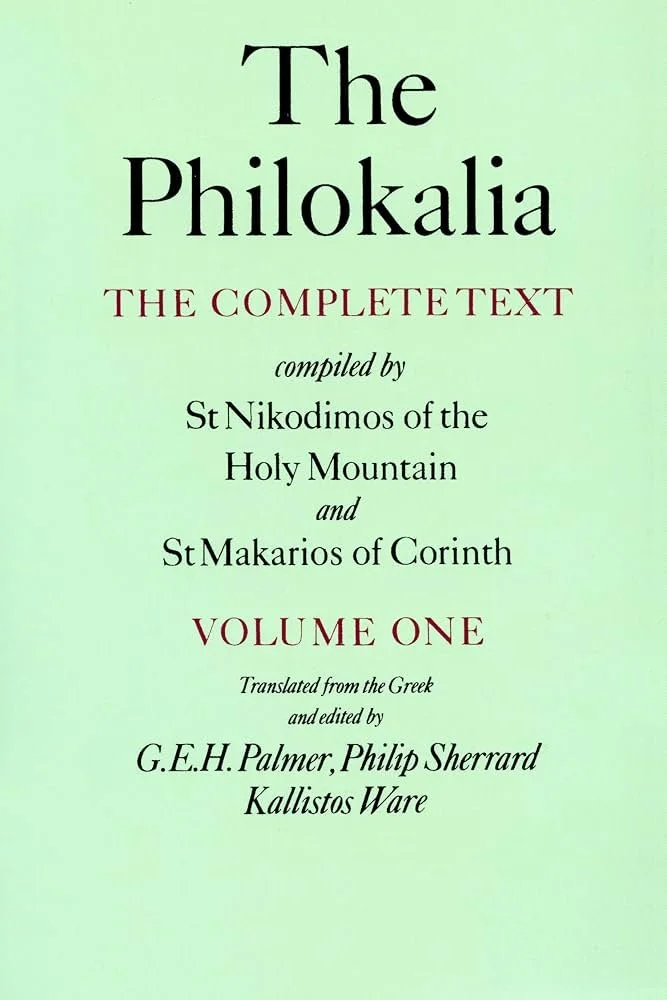
A final example from the monastic tradition is St. Hesychios’s treatise, “On Watchfulness and Holiness,” one of the many fascinating texts on prayer collected in the Philokalia. Hesychios was an 8th- or 9th-century monk and abbot at the Monastery of the Mother of God of the Burning Bush, located in Sinai, a student of the writings of John Climacus, Mark the Ascetic, and Maximus the Confessor. Hesychios relates to the notion of attention another key monastic word, “watchfulness” (νῆψις, nepsis), which derives from 1 Peter 5:8: “Be sober-minded (νήψατε); be watchful (γρηγορήσατε). Your adversary the devil prowls around like a roaring lion, seeking someone to devour.” (See also 1 Thess. 5:8; 2 Tim. 4:5; and 1 Pet. 1:13, 4:7). St. Hesychios defines watchfulness like this:
Watchfulness is a spiritual method (μέθοδος πνευματική) which, if sedulously practiced over a long period completely frees us with God’s help from impassioned thoughts, impassioned words, and evil actions. It leads, in so far as this is possible, to a sure knowledge of the inapprehensible God, and helps us to penetrate the divine and hidden mysteries. . . . It is, in the true sense, purity of heart, a state blessed by Christ when He says: “Blessed are the pure in heart, for they shall see God” (Matt. 5:8).
— Hesychios, On Watchfulness and Holiness 1
Watchfulness entails a diligent, focused effort to purify the heart through embracing virtue, guarding the imagination from deceptive images, and protecting the mind from false thoughts. It also means calling upon Jesus continually and humbly for help and contemplating one’s death and moral finitude. Such practices of watchfulness, Hesychios says, are like doorkeepers who “bar entry to evil thoughts.” They help keep at a distance the evil logismoi that demons use to stir us into an anxious frenzy. As Evagrius of Pontus writes:
A custom of the demons [is] after impure thoughts to instill thoughts of anxiety and a multitude of mental representations in the mind; choked by the thorns of anxiety, our efforts are rendered fruitless. . . . As an athlete will be hindered by his tunic, so also the mind will be easily dragged about by thoughts of anxiety.
—Evagrius of Pontus, On Thoughts 6
Watchfulness thus is an important aid to combatting demonic thoughts and cultivating attention, one that creates stillness in the heart and an undiluted focus on God. As Hesychios puts it, attention is “the heart’s stillness, unbroken by any thought.” It is an inner stillness in which “the heart breathes and invokes, endlessly and without ceasing, only Jesus who is the Son of God and God himself.” John Cassian similarly describes attention as the heart of the Christian life:
A monk’s whole attention should be fixed on one point, and the rise and circle of all his thoughts be vigorously restricted to this very thing—that is, the recollection of God.
— John Cassian, Conferences 24.6.1–3
Conclusion
We find ourselves today reeling in a world of distraction and disruption. We feel it at work, at home, with loved ones. We cannot read as long as we used to; we cannot pay attention to the person right in front of us. Most of all, we cannot pray. Simone Weil was right that attention taken to its highest degree is prayer. And this she echoed a long line of patristic thinking. To cite Evagrius again: “Attentiveness seeking prayer finds prayer; for prayer follows attentiveness, if [it follows] anything, and it should always be zealously sought” (Evagrius, On Prayer 149).

Evagrius of Pontus (4th c.)
Attention is a difficult and delicate matter. We recognize that there is more complexity to it than simply a particular piece of technology—and even a particular cultural moment. Attention is a matter ultimately of human nature, which is to say: the human being as made in the image and likeness of God.
Put otherwise, attention has metaphysical as well as moral dimensions. Attention gets to the core of what it means to be human and how we live as creatures in a world not of our making. The church fathers point us to this theological and anthropological dimension of attention, while also offering a practical guide forward—a pathway by which we can learn to attend to the God who is, most fundamentally, the one who attends to us. Through being attended to by Christ—our being is being held by Christ—we are summarily gathered from the distractions and dissipations of the soul’s inhabitation of fallen time. Through the grace of Christ’s attention to us, we can leave behind the idols of our age and stretch out to the one who calls us to himself.